Course Catalog

Approved and endorsed by CSCMP, we combine educational technology
with a dynamic curriculum to help learners achieve deep learning of logistics concepts.

Browse By:

AI in Supply Chain and Logistics

3 Lessons

Unlocking AI in Logistics and Supply Chain: Foundations and Everyday Applications.

  • Explain what artificial intelligence is, how it differs from related technologies, and how AI systems learn, adapt, and make decisions.
  • Describe how AI is used in everyday life and across global industries, with emphasis on its current and emerging applications in logistics and supply chain operations.
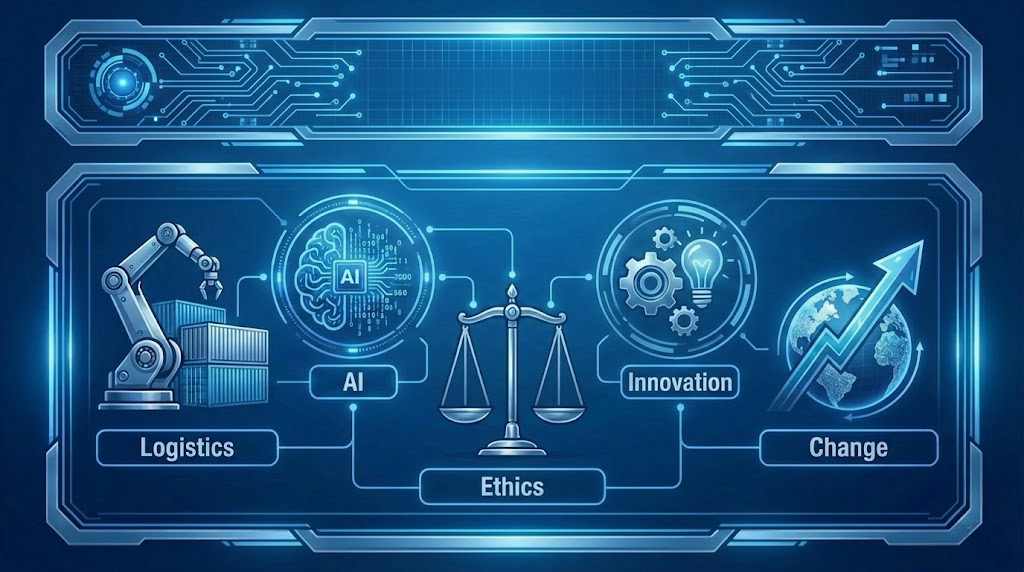
  • Evaluate the opportunities, challenges, and organizational impacts of AI adoption—including ethical, workforce, and sustainability considerations.
  • Assess how AI supports professional growth and organizational strategy, and identify the skills needed to work effectively in an AI-enabled logistics environment.
  • Demonstrate an understanding of the role of change management and personal adaptability in helping individuals and teams transition to AI-driven workflows.
read more
2 Lessons

Unlocking AI in Logistics and Supply Chain: The Evolution of AI in Supply Chain

  • Explain how AI has evolved within logistics and supply chain management—from rule-based automation in the 1980s to machine learning, intelligent automation, autonomous operations, and generative AI today.
  • Identify key technological breakthroughs and their impact on modern operations, including forecasting, supplier risk management, procurement automation, warehousing, and transportation optimization.
  • Describe what makes a supply chain data-driven and recognize the major data sources, integration methods, and analytics tools that enable real-time visibility and smarter decision-making.
  • Differentiate between descriptive, predictive, and prescriptive analytics and explain how AI transforms data into proactive insights and optimized actions across procurement, warehousing, transportation, and customer fulfillment.
  • Assess the opportunities and challenges organizations face when adopting AI and data-driven practices, including issues related to data quality, systems integration, organizational readiness, and workforce skills.
read more
2 Lessons

Unlocking AI in Logistics and Supply Chain: Automation and AI’s Place in Supply Chain

  • Distinguish the roles of AI and automation and explain why their integration is critical to modern supply chain performance.
  • Describe how AI-driven insights and automated execution work together in a continuous improvement cycle across logistics operations.
  • Identify practical AI and automation use cases across warehousing, transportation, ports, back-office processes, and compliance.
  • Explain how AI operates at ecosystem scale, connecting decisions across procurement, planning, inventory, and fulfillment.
  • Recognize the evolving role of humans and leadership in governing, guiding, and extracting value from intelligent supply chain systems.
read more
3 Lessons

Unlocking AI in Logistics and Supply Chain: Working with Advanced AI in Modern Supply Chains

  • Explain how advanced AI architectures—including digital twins, AI-powered agents, and agentic AI—work together to support end-to-end supply chain decision-making.
  • Evaluate real-world applications of AI across planning, execution, risk management, and compliance in modern logistics networks.
  • Differentiate between task-based AI agents and agentic AI systems, and assess where each delivers the greatest operational and strategic value.
  • Identify the tools, platforms, and data integrations that enable AI to scale effectively across ERP, WMS, TMS, and supply chain ecosystems.
  • Apply leadership and governance considerations to deploy AI responsibly, balancing automation, human oversight, risk, and organizational readiness.
read more
2 Lessons

Unlocking AI in Supply Chain: AI for Customer Service and Sustainability

  • Explain how AI enhances customer experience in logistics by improving visibility, responsiveness, personalization, and proactive issue resolution through tools such as chatbots, predictive insights, and AI-driven CRM systems.
  • Analyze how AI supports sustainability and ESG objectives by optimizing transportation, inventory, and operations to reduce emissions, waste, and resource use while improving transparency and compliance.
  • Evaluate real-world use cases where AI-driven insights deliver both measurable sustainability outcomes and improved customer satisfaction, highlighting the balance between automation and human expertise.
  • Assess organizational readiness and apply course concepts to identify practical opportunities for responsible AI adoption, considering data quality, system integration, and workforce skills.
read more
X