Course Catalog

Approved and endorsed by CSCMP, we combine educational technology
with a dynamic curriculum to help learners achieve deep learning of logistics concepts.

Browse By:

Exports

2 Lessons
$85

FreightPath U.S. Export Regulations Training Overview

  • Describe the purpose and scope of U.S. export controls in global trade.
  • Identify key agencies (e.g., BIS, CBP) and their roles in export regulation.
  • Explain the significance of compliance with export laws for businesses.
  • Summarize the impact of federal regulations like EAR and ITAR on exports.
  • Recognize how agencies coordinate to enforce export compliance.
read more
2 Lessons
85

Export Compliance Requirements and Overview of Export Controls

  • Determine whether an export is subject to the EAR using decision criteria and classification steps.
  • Explain how technical data, software, and electronic commerce are controlled under U.S. export regulations.
  • Identify compliance considerations for foreign-origin items, in-transit shipments, carnets, and re-exports.
  • Describe when export licenses are required and how to navigate the licensing process.
  • Explain proper export clearance procedures, including EEI filing requirements.
  • Recognize compliance obligations related to restrictive trade practices, boycotts, and record keeping.
  • Identify the responsibilities of forwarders and other agents in ensuring compliant export transactions.
read more
3 Lessons
$85

Export Licensing

  • Explain the role of EAR license exceptions and No License Required (NLR), including how license exceptions differ from standard export licenses and when NLR may be used under the Export Administration Regulations (EAR).
  • Identify and apply commonly used and specialized EAR license exceptions, including GBS, LVS, and other frequently used exceptions, while recognizing restrictions that limit or prohibit their use and the influence of multilateral frameworks such as the Wassenaar Arrangement.
  • Define exporter, agent, and freight forwarder responsibilities in the export licensing process, including jurisdictional requirements, applicant qualifications, pre-registration obligations, and the role of supporting documentation.
  • Apply procedures for obtaining and supporting export licenses administered by the Bureau of Industry and Security (BIS), including classification requests, advisory opinions, license applications, import certificates, and delivery verification requirements.
read more
1 Lessons
$85

U.S. Export Responsibilities by Government Agency

  • Identify the primary U.S. cabinet-level agencies responsible for export regulation and enforcement, including the Department of Commerce (ITA and Bureau of Industry and Security), the Department of State (Directorate of Defense Trade Controls), the Department of the Treasury (Office of Foreign Assets Control), U.S. Customs and Border Protection, and the U.S. Census Bureau.
  • Differentiate the roles and authorities of U.S. export control, sanctions, enforcement, and statistical agencies, including how their responsibilities intersect across licensing, sanctions compliance, export clearance, enforcement actions, and trade data reporting.
  • Explain how U.S. export policies and regulations are developed and coordinated, including the purpose and function of joint policy and advisory bodies such as the Export Administration Review Board (EARB), Advisory Committee on Export Policy (ACEP), and Technical Advisory Committees (TACs).
  • Apply an agency-aware compliance perspective to export transactions, recognizing when multiple agencies may have jurisdiction and how exporters and intermediaries must navigate overlapping regulatory requirements.
read more
1 Lessons
$85

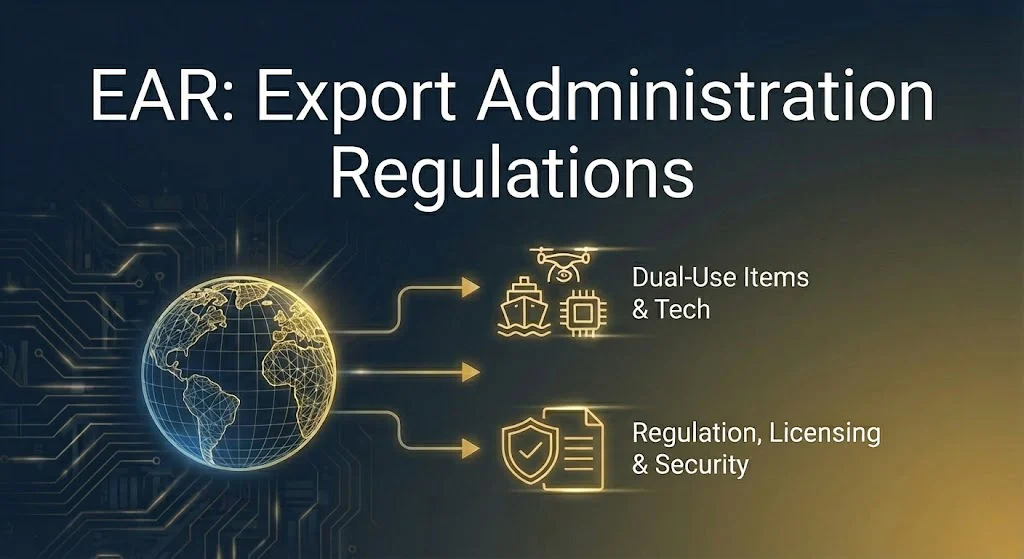
Export Administration Regulations (EAR)

  • Explain the role of the EAR and the Ten General Prohibitions in determining export requirements.
  • Apply the Commerce Control List (CCL) to identify an item’s classification and locate the correct ECCN.
  • Use decision trees, CCL categories, and country charts to determine licensing requirements.
  • Recognize when technical expertise is needed to interpret complex classifications under the CCL.
read more
2 Lessons
$85

Enforcement of U.S. Export Law and Regulations

  • Identify civil, criminal, and administrative penalties for export violations.
  • Explain enforcement tools such as denial orders, debarment, and forfeiture.
  • Recognize the compliance responsibilities of exporters, forwarders, and related parties.
  • Describe CBP’s enforcement role, including manifest review and Operation Exodus.
  • Explain ICE special agents’ role in export investigations.
  • Understand CBP seizure and forfeiture processes and their implications.
read more
1 Lessons
$85

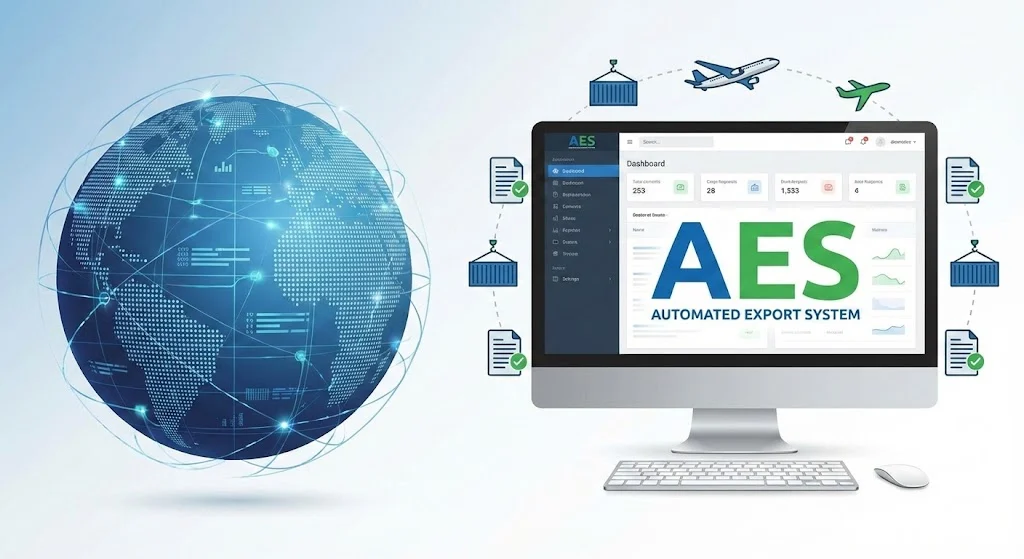
The Automated Export System (AES) Introduction

  • Describe the purpose and key functions of AES.
  • Identify who may file EEI in AES, including the roles and responsibilities of the USPPI, FPPI, and authorized filing agents under 15 CFR 30.2-30.3.
  • Explain the core data and competency requirements for AES filing.
read more
6 Lessons
$95

AES Advanced Concepts

  • Understand the roles and responsibilities of key parties in export transactions, including distinctions between the “Exporter” and “Principal Party in Interest.”
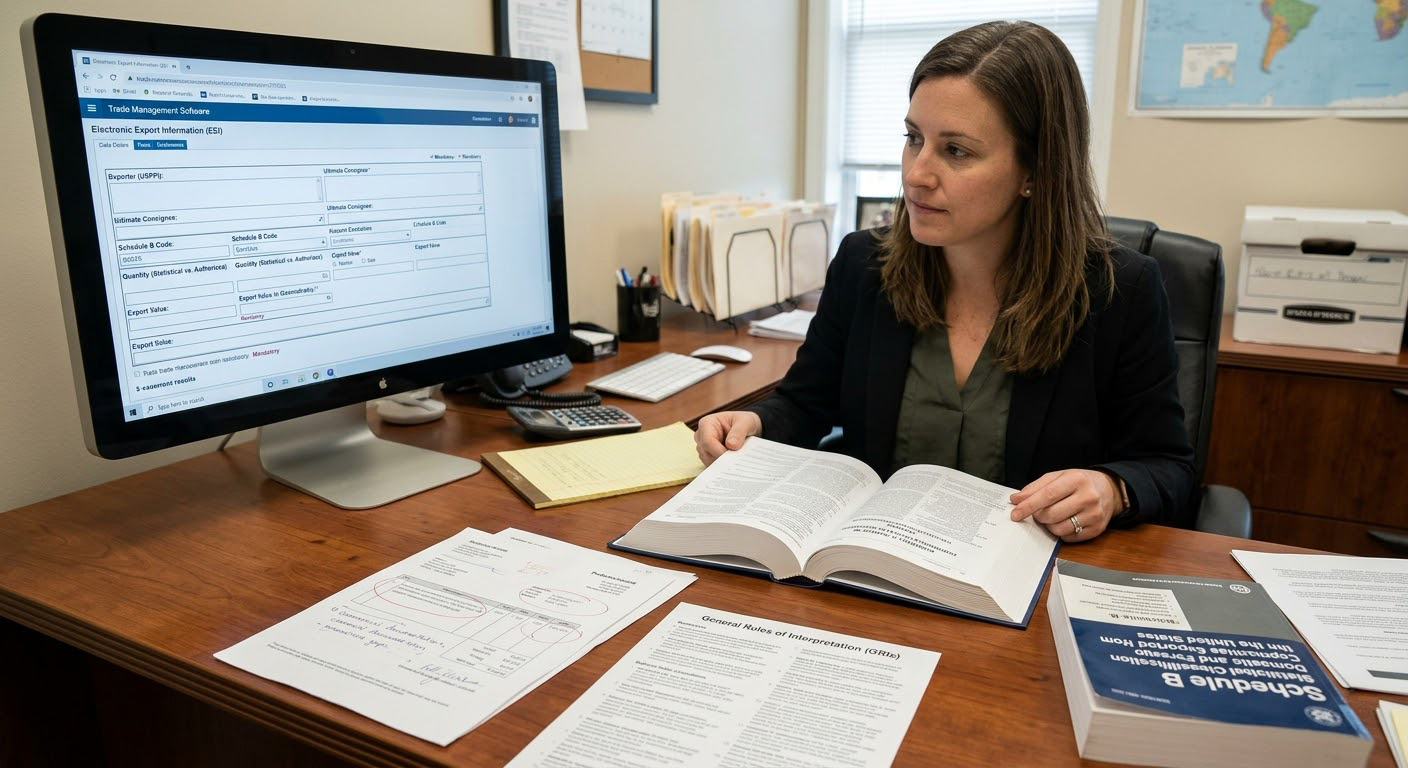
  • Identify and report mandatory, conditional, and optional Electronic Export Information (EEI) data elements while addressing gaps in commercial documentation.
  • Develop skills in classifying exported products using the Harmonized Tariff System (HTS) and Schedule B, applying General Rules of Interpretation (GRIs), and handling special provisions under Schedule B Chapter 98.
  • Understand the step-by-step Schedule B classification process, including using tools like the commodity index and table of contents.
  • Gain expertise in net quantity reporting, including double reporting units and distinctions between statistical and authorized quantities.
  • Learn how to determine U.S. Export Value for EEI filings, make necessary adjustments for delivery terms, and estimate values as allowed by Foreign Trade Regulations (FTR).
  • Integrate these skills to ensure compliance with export documentation requirements and avoid penalties or delays.
read more
2 Lessons
$85

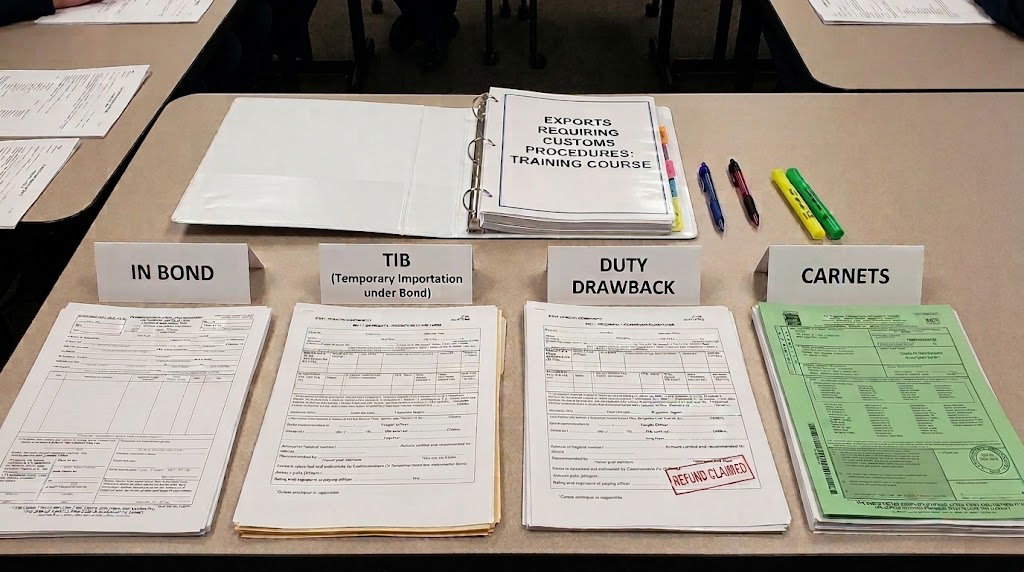
Exports Requiring Customs Procedures (In Bond, TIB, Duty Drawback, Carnets)

  • Differentiate export transactions subject to U.S. Customs procedures, including exports under bond, in-transit movements, bonded warehouse and Foreign Trade Zone exports, carnets, and transactions requiring a licensed customs broker under rules administered by U.S. Customs and Border Protection (CBP).
  • Apply regulatory and operational requirements for exporting goods under customs bond, including identifying applicable export controls, entry types, cancellation of temporary import entries, and processing obligations for bonded exports.
  • Identify duty drawback–eligible export scenarios, including rejected merchandise, unused merchandise, and manufacturing drawback, and recognize when drawback rulings and after-the-fact proof of export are required.
  • Apply specialized export compliance procedures, including AES filing rules for used self-propelled vehicles, one-vehicle-per-declaration requirements, state-controlled goods considerations, and determining when a customs broker license is required.
read more