Approved and endorsed by CSCMP, we combine educational technology
with a dynamic curriculum to help learners achieve deep learning of logistics concepts.
Browse By:
Dangerous Goods
1 Lessons
Dangerous Goods Shipper’s Declaration
Differentiate between a DG “transport document” (shipper’s declaration/certification) and a “transportation document,” and explain how each functions within dangerous goods compliance.
Identify and apply the core documentation requirements for regulated DG shipments, including when a shipper’s declaration must accompany or be referenced on the transportation document.
Determine when a separate shipper’s declaration form is required versus when documentation may be combined, based on transport mode, airline/operator policies, use of freight forwarders, and multimodal movements.
Explain carrier and intermediary chain-of-custody responsibilities, including retention, transfer, and availability of signed shipper certifications across carriers and formats (paper or approved electronic).
Apply documentation exceptions and special statements correctly, including limited/excepted cases and negative declarations (“Not Restricted” / “Not DG”) to ensure accurate acceptance and avoid shipment delays.
How to Determine if Material is Classified as Dangerous Goods and Using Classes/Divisions
Apply a structured decision process to determine whether a material is regulated as dangerous goods, including when to stop/hold a shipment and escalate for expert confirmation.
Use the Dangerous Goods List (DGL) to correctly identify and interpret core classification elements—UN number, proper shipping name, hazard class/division, subsidiary risk(s), and packing group.
Validate classification when information is incomplete or unclear by using SDS data, manufacturer guidance, N.O.S. entries, and (when needed) competent authority support—without guessing.
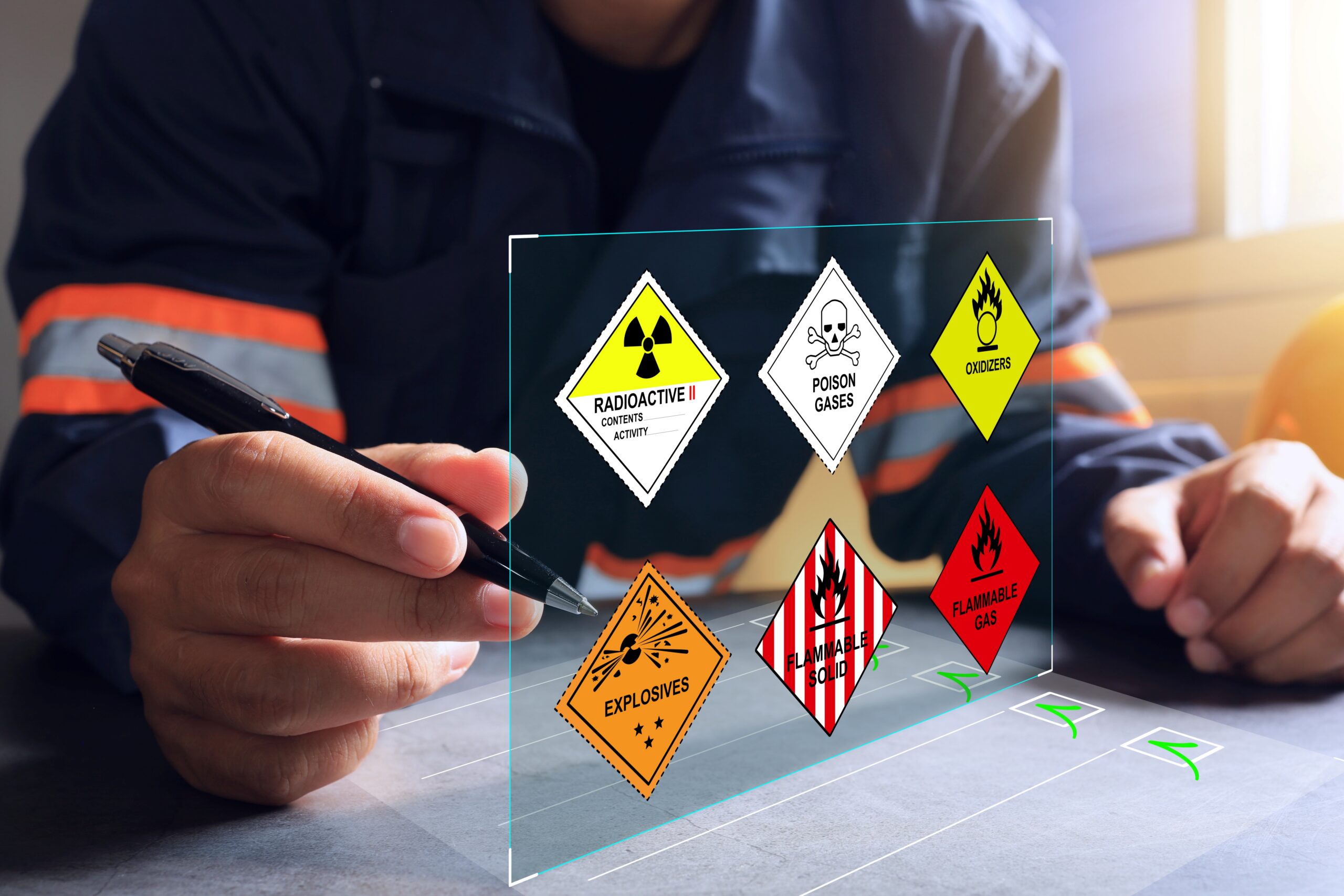
Explain the DG hazard communication framework by describing the nine hazard classes, key divisions within major classes, and how packing groups indicate the degree of danger and response/controls.
Translate hazard classification into operational compliance actions, anticipating downstream needs such as labeling, segregation/compatibility controls, mode restrictions, and heightened oversight for higher-risk classes (e.g., Class 1 compatibility groups, Class 7 controls, Class 9 special cases).
Explain the structure and scope of U.S. and international dangerous goods regulations, including HMR, IMDG Code, ICAO Technical Instructions, and IAEA rules, and how harmonization, national variations, and carrier restrictions affect compliance.
Determine regulatory applicability for domestic, international, and multimodal shipments, applying the principle of the most restrictive requirements across transport modes, countries, and carriers, including U.S.–Canada reciprocal provisions.
Identify dangerous goods subject to regulation by correctly using the Dangerous Goods List and U.S. Hazardous Materials Table to interpret UN numbers, proper shipping names, hazard classes/divisions, packing groups, and special provisions.
Define the roles, responsibilities, and liability exposure of parties involved in DG transportation, including shippers, carriers, freight forwarders, and other “offerors” under U.S. HMR.
Assess dangerous goods training requirements for personnel, including who qualifies as a hazmat employee and which training categories apply based on job functions and regulatory obligations.
Import-Export Documents for DG, Animals, Plants, & Other Related Factors
Why destination country officials may order the arriving transportation conveyance not to unload a shipment that arrives without required product-based documentation.
The two types of documents that destination country customs authorities will require for clearance of dangerous goods
Why an exporter and its forwarder should not rely solely on the importer informing as to what product-based import requirements are required for the exporter’s product in the destination country